
Restaurant Automation: Tame Your Reservation To-Do List
Cut No-Shows by 30%, Optimize Seating, and Stop Playing Phone Tag
It's Friday at 5 PM. Your hostess is fielding phone calls while managing a waitlist, your best table is empty because of a no-show, and you're short-staffed because Tuesday's reservation count looked light. Sound familiar? Restaurant reservation management is a daily operational headache—and AI tools are solving it for less than the cost of one no-show table per week.
A 2025 study found AI reservation systems reduced no-shows from 34% to 5% in some restaurants. That's not incremental improvement—that's a transformation of your bottom line.
The Hidden Cost of Manual Reservation Management
Most restaurant owners know no-shows are expensive. But when I look at the full picture of manual reservation management, the costs run much deeper:
Phone Tag: The Time Black Hole
Your host or manager spending 2-3 hours per day answering phone calls, most of which are reservation requests, changes, or cancellations. At $18-25/hour for a capable host, that's $12,000-$18,000 per year just on phone-based reservation management.
Worse: every call that goes to voicemail during the rush is a potential reservation—and revenue—you'll never capture.
No-Shows: The Profit Killer
Industry average no-show rates run 15-20% for restaurants without a management system. For a 60-seat restaurant with an average ticket of $45, that's potentially:
Even at half-capacity impact (you fill some of those tables with walk-ins), you're still looking at $400-500/night or $12,000-$15,000/month in lost revenue from no-shows alone.
Staffing Guesswork
You staff based on reservations. Reservations don't show up. Now you're overstaffed. Or worse: a burst of walk-ins fills the no-show gap and you're suddenly understaffed for the actual demand. AI predicts actual attendance, not just reservation count, so you staff for reality.
What AI Reservation Systems Actually Do
This isn't science fiction. These tools exist today, work with your existing setup, and most pay for themselves in the first month:
Smart Confirmations That Prevent No-Shows
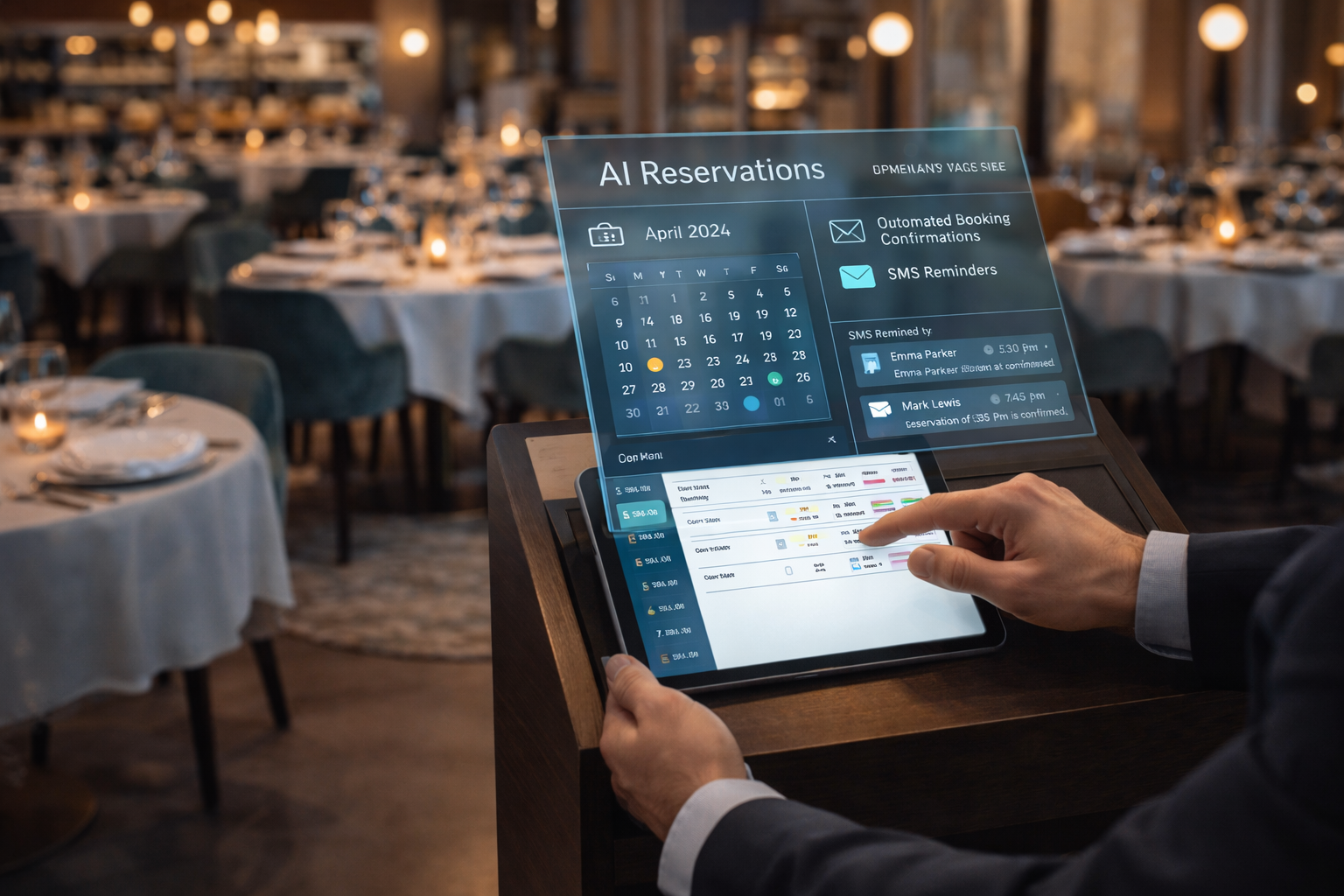
AI systems send timed confirmation messages (SMS, email, or both) that are optimized for response rates. Not just “Reminder: you have a reservation” but intelligent messages that make it easy to confirm, modify, or cancel.
The key insight: AI learns which confirmation timing and wording works best for YOUR restaurant. A casual burger joint gets different messaging than a fine-dining establishment.
No-Show Risk Scoring
Based on booking patterns, past behavior, day of week, and party size, AI assigns a no-show probability to each reservation. High-risk bookings get extra confirmation touchpoints or can be required to leave a card on file.
One multi-location restaurant group saw no-shows drop from 34% to 5% by implementing risk-based deposit requirements only on high-probability no-shows—without annoying their reliable regulars.
Automatic Waitlist Backfill
When a cancellation comes in, AI immediately offers the slot to your waitlist—ranked by party size match, historical spending, and timing. No host needed. The table fills itself.
Optimized Table Assignment
AI considers party size, dining duration predictions, server sections, and turn times to seat guests optimally. A party of 2 doesn't get the 6-top during peak hours. Sounds obvious, but under pressure, hosts make suboptimal seating decisions that cost you 1-2 turns per night.
The ROI Math for a 60-Seat Restaurant
Monthly ROI Calculation
Current losses (conservative):
- No-show revenue loss: $8,000-$15,000/month
- Phone management labor: $1,000-$1,500/month
- Overstaffing from bad predictions: $500-$1,000/month
- Total: $9,500-$17,500/month
With AI reservation management:
- AI platform cost: $200-$500/month
- Expected no-show reduction: 25-30%
- Phone time reduction: 60-70%
- Net monthly savings: $3,000-$8,000
- ROI: 500-1,500%
Beyond Reservations: The Scheduling Cascade
When your reservation data gets smarter, everything downstream improves:
Staff Scheduling
AI predicts actual covers (not just reservations) so you schedule the right number of servers, cooks, and bussers. No more calling someone in last minute or sending staff home early.
Prep and Purchasing
When you know how many covers to expect with higher accuracy, you prep the right amount of food. Less waste, fewer 86'd items, better food cost percentages.
Guest Experience
AI remembers guest preferences, dietary restrictions, special occasions, and seating preferences. Your regulars feel recognized without your staff having to maintain a mental database.
Getting Started This Week
The barrier to entry is lower than you think:
- Already using OpenTable, Resy, or Yelp Reservations? Check if your plan includes AI features—many have added them recently at no extra cost.
- Using a basic system or pen-and-paper? Start with a tool like Hostie or ResOS that specifically focuses on AI-driven reservation management.
- Not ready for a new system? Even adding automated SMS confirmations through your existing platform can cut no-shows 15-20% with zero system change.
Your Restaurant Automation Challenge
This week, measure the true cost of your current reservation process:
- 1. Count no-shows for one week and multiply by average ticket price
- 2. Track hours spent on phone reservations and confirmation calls
- 3. Note how many times you were over- or under-staffed due to reservation inaccuracy
- 4. Add it up—then compare against $200-500/month for an AI reservation tool
Most restaurant owners who do this math implement a solution within 30 days. The numbers are that compelling.
Want to explore what AI can do for your business?
Let's have a conversation about your specific operations and challenges.
Schedule a Free Discovery Call